




Project Snapshot

IndustryGlobal Aviation Training & Safety Simulation
AudienceCaptains, First Officers, Cabin Crew, Air Traffic Control (ATC) Professionals
Delivery Format30–40 minutes (simulation journey)
Delivery ModelHTML-Based Advanced Simulation Interface
Project TypeRFP Proof of Concept (Single Mode Developed – Captain)
languagesEnglish
Project Duration3–4 Weeks

Impact at a Glance

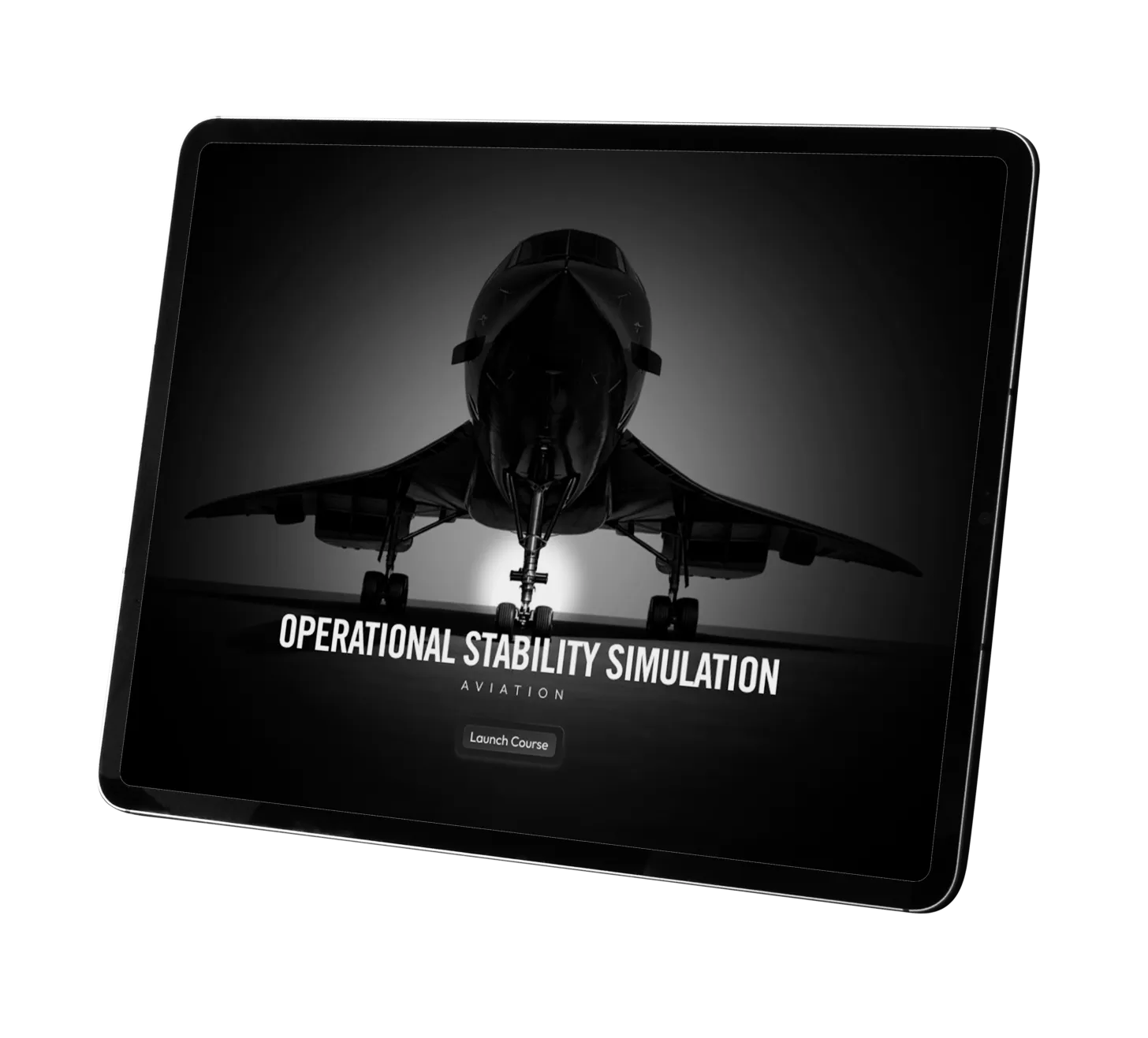
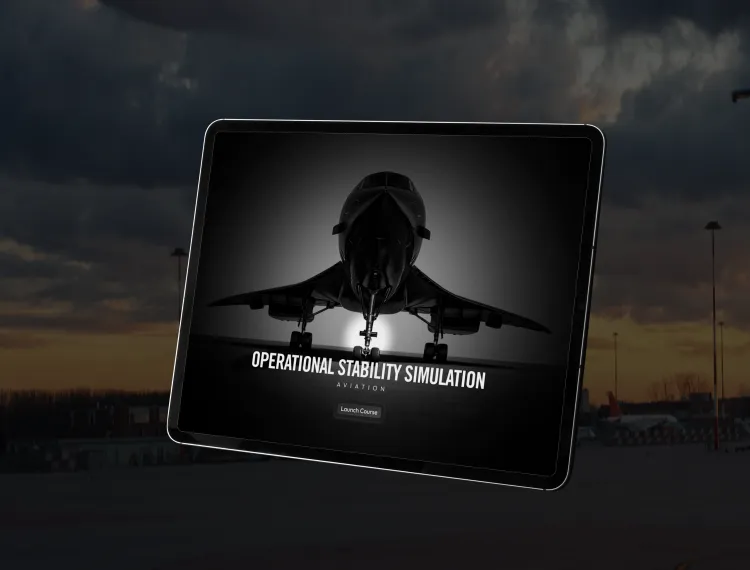
High-pressure aviation simulation replicating real in-flight decision scenarios

AI-driven communication between Captain and crew roles

Predictive UX enabling rapid, high-stakes decision-making

Real-time stability meter reflecting decision impact

Behaviour-driven outcomes influencing flight progression and ETA

Immersive cockpit-style interface with minimalistic design

Key Challenges & Constraints

1. High-Stakes Scenario Accuracy

The simulation needed to reflect realistic aviation communication and decision flows without oversimplification.


2. Multi-Role System Architecture

The design included multiple roles:

  • Captain
  • First Officer
  • ATC
  • Cabin Crew

However, only the Captain pathway was developed in this phase.


3. AI Communication Design

AI-driven roles (ATC, FO, Cabin Crew) required:

  • consistent tone
  • realistic phrasing
  • defined communication guardrails  

4. Real-Time Decision
Consequence Mapping 

Each decision affected:

  • flight stability  
  • passenger behaviour  
  • ETA 

Requiring dynamic system logic.


5. Complex Simulation
Testing

Multiple branching scenarios, guardrails, and AI responses required thorough validation. 


Our Strategic Approach

  • new conditions (weather, passenger behaviour, system alerts)
  • incoming communication from crew or ATC
  • decision points for the Captain

Predictive UX Decision System

Instead of static choices, the interface presented context-aware decision options, allowing the learner to act quickly under pressure.

AI-Driven Communication Layer 

Crew roles were simulated using structured AI responses, aligned to: 

  • aviation communication standards
  • defined interaction guardrails

mic-enabled interaction option allowed learners to ask additional questions before making decisions. 

Behavioural Feedback System 

Each decision triggered:

  • insight-based learning prompts
  • impact on the stability meter

This reinforced behavioural learning rather than simple correctness.

Full Flight Journey Simulation

Learners progressed through a London–Mumbai route, with the aircraft moving forward visually after each decision.

High-Pressure Gamified Interface

Minimalistic cockpit-style UI with dark mode design enhanced focus and realism.

Insight-Based Feedback Loop

Each decision provided contextual insights to reinforce correct behaviour.

Estimated Learning Metrics

30–45% improvement

Decision-Making Accuracy Under Pressure

25–40% increase

Situational Awareness Retention

2–3× higher

Engagement Levels in Simulation-Based Training

35–50% improvement

Confidence in Handling Critical Scenarios

Impact Beyond Training

The simulation trained users to think under pressure rather than recall procedures.

The system can expand to include:

  • First Officer
  • ATC
  • Cabin Crew pathways

Demonstrated how artificial intelligence in learning can enhance real-time simulation.

The prototype positions digital learning as a viable alternative to traditional simulation-heavy training.

Key Takeaways

Simulation Is Critical for High-Risk Training
Real-world pressure cannot be replicated through static content.

AI Enhances Realism in Learning Environments
AI-driven communication brings contextual depth to simulations.

Behaviour-Based Learning Drives Better Outcomes
Decision impact matters more than theoretical correctness.

Gamification Can Support Serious Training
When designed correctly, it enhances focus without reducing gravity.

Q1. Was this a full multi-role simulation?

Yes. Crew roles were simulated using structured AI communication.

Q2. Did the module include AI interaction?

Yes. Crew roles were simulated using structured AI communication.

Q3. Was this deployed as a full training solution?

No. This was a Proof of Concept developed for RFP submission.

Q4. How were decisions evaluated?

Through a stability meter and outcome-based feedback system.

Q5. Why is this considered complex?

The simulation combined AI interaction, real-time decision logic, and behavioural outcome mapping within a single system.