







Aviation and Transport Training — Safety, Compliance, and Operational Excellence
Aviation has one of the lowest accident rates of any transport mode, 0.07 fatal accidents per million departures in 2024. This extraordinary safety record is not accidental. It is the product of the most comprehensive mandatory training and competency assurance systems in any industry, built over 80 years of systematic learning from every incident and…
1. The Safety Record — What 80 Years of Training Investment Built
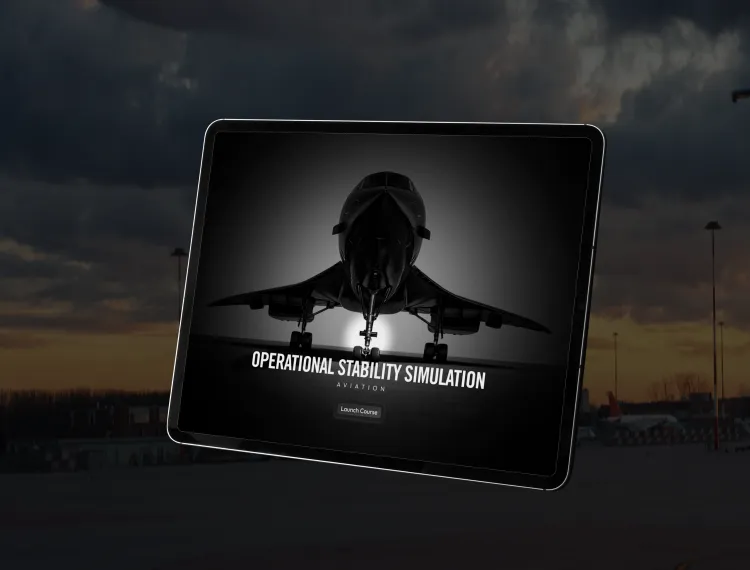
Commercial aviation’s safety trajectory is one of the most remarkable capability development stories in industrial history. In the 1950s, jet aviation was genuinely dangerous. By 2024, the fatal accident rate had fallen to 0.07 per million departures. This improvement did not happen primarily through better technology it happened through better training, better error reporting culture, and better systems for learning from every incident before it became a fatal accident. The methodology that produced this record is the most thoroughly evidenced approach to high-consequence capability development ever assembled.
0.07
fatal accidents per million commercial departures in 2024 — one of the lowest accident rates of any human activity, achieved through systematic training investment, competency assurance, and safety culture development over 80 years (IATA Safety Data via SmartQHSE 2026)
70–80%
of aviation accidents historically attributed to human factors rather than technical failure — the research finding that drove the development of Crew Resource Management and the non-technical skills training revolution in aviation (NTSB Human Factors Research via eLearning Industry 2025)
CRM adoption
Crew Resource Management training, mandated globally by ICAO since 1993 and continuously refined through evidence, is widely credited as the single most significant training intervention in aviation’s safety improvement trajectory
Cross-sector
adoption growing — CRM methodology is now standard in healthcare, nuclear, maritime, and rail — with documented incident rate reductions in each sector, confirming that aviation’s non-technical skills training approach transfers to other high-consequence contexts
Key Distinction
Aviation’s safety methodology is not a set of procedures to be followed. It is a capability development system — one that develops the non-technical skills (CRM), the error management framework (TEM), the competency assessment methodology (simulation), and the reporting culture (just culture) that together produce the system resilience that prevents accidents. The aviation industry learned that procedures alone do not produce safety. The capability to apply procedures effectively under real operational conditions, including the degraded conditions that precede accidents.
2. Crew Resource Management — The Non-Technical Skills Revolution
“The investigation finding that changed aviation training in the 1970s was not a technical failure. It was the discovery that crews with fully functional aircraft were dying because the captain’s authority was not challenged when they made an error, because workload management failed in a high-pressure moment, and because communication broke down when it was most needed. CRM was the response: systematic training for the human factors that investigations consistently found at the root of survivable accidents.“
- CRM develops the non-technical skills that technical training cannot. Technical proficiency — knowing how to fly the aircraft — does not develop the communication skills to challenge a senior colleague’s error, the situational awareness to monitor multiple system states simultaneously, or the decision-making framework to choose between options under time pressure. CRM training develops these specific capabilities through scenario practice that replicates the real operational conditions in which they are required — including the authority gradients, workload pressures, and uncertainty conditions that real-world performance demands.
- CRM methodology has transferred successfully to healthcare and other high-consequence industries. The joint commission finding that 80% of serious medical errors involve communication failure mirrors the aviation finding that drove CRM development. Healthcare CRM programmes — Team STEPPS in the US, NOTECHS-derived frameworks in the UK — have produced documented improvements in team communication, error reporting, and adverse event rates in operating theatres, ICUs, and emergency departments. The methodology transfers because the human factors that produce failures in high-consequence team environments are consistent across industries.
3. Simulation-Based Competency Assessment
- Line Oriented Flight Training (LOFT) assesses performance in realistic operational scenarios. LOFT places crews in simulator scenarios that replicate realistic flight operations — including the time pressures, ambiguities, and system degradations of real flights — and assesses performance against competency standards in the conditions where competency will be demanded. This is categorically different from technical skills testing in stable conditions: LOFT assesses the crew’s ability to integrate technical, procedural, and non-technical capabilities under the same pressures that produce accidents. No other assessment methodology produces equivalent evidence of operational readiness.
- Evidence-Based Training (EBT) uses operational data to target simulation scenarios at the highest-risk capability areas. EBT, now the standard approach endorsed by ICAO and IATA, uses operational safety data — voluntary reports, Flight Data Monitoring, accident analysis — to identify the specific capability areas where crew performance is most variable and where training intervention produces the most safety benefit. The simulation scenarios are designed from the operational evidence rather than from historical content inventories, producing training that addresses the current safety-critical capability gaps rather than the traditional training syllabus.
4. Just Culture — The Safety Reporting Foundation
| Culture Type | Error Reporting Behaviour | Safety Learning Outcome |
|---|---|---|
| Blame culture | Errors concealed; near-misses unreported; incidents minimised | System learns from accidents only — after harm has occurred |
| No-blame culture | All errors reported regardless of cause; no accountability for deliberate violations | High reporting but no professional accountability; safety standards drift |
| Just culture | Honest reporting of errors and near-misses; clear distinction between honest mistake and deliberate violation; proportionate accountability | High-quality voluntary safety reporting enables systemic learning before accidents occur |
- Just culture is the prerequisite for the safety reporting that enables systemic learning. The Aviation Safety Reporting System (ASRS) in the US and equivalent systems globally generate millions of voluntary safety reports annually the early warning system that identifies systemic safety issues before they produce accidents. This reporting only exists because aviation’s just culture makes reporting rational: reporters are protected from punitive action for honest mistakes, while deliberate violations remain subject to appropriate accountability. No just culture, no voluntary reporting. No voluntary reporting, no systemic safety learning.
In Summary
Aviation’s safety record is the most compelling evidence available for the value of systematic, evidence-based, simulation-assessed, culture-supported capability development in high-consequence industries. The 0.07 fatal accidents per million departures was not achieved by building better aircraft. It was achieved by building better human capability — through 80 years of CRM development, simulation-based competency assessment, just culture investment, and evidence-based training design that continuously targets the capability areas where safety performance is most variable.
The methodology that built aviation safety is available to every high-consequence industry. Healthcare CRM programmes are already producing the documented adverse event reductions that confirm transfer. The nuclear, maritime, rail, and other high-reliability industries that have adopted aviation’s non-technical skills and safety culture methodology are producing comparable improvements. The training investment required is substantial. The consequence of not making it, measured in preventable incidents and avoidable harm, is substantially larger.
Qquench · 25+ Years · Aviation-Methodology Training Design · CRM for High-Consequence Industries · Non-Technical Skills Development · Safety Culture Building · Simulation-Based Competency Assessment · Fortune 100 · Global
Qquench designs training that applies aviation’s proven safety methodology — CRM, TEM, simulation-based assessment, and just culture — to high-consequence industries seeking the safety performance that systematic training investment produces.
We work with aviation organisations and other high-consequence industries to design the non-technical skills, safety culture, and competency assurance programmes that the evidence shows prevent incidents before they occur.
Frequently Asked Questions
Q1
What training methodologies make aviation the safest form of transport?
CRM — systematic training for communication, situational awareness, decision-making, and crew coordination. TEM, threat and error management framework developing procedures to counter known hazards. Simulation-based competency assessment in realistic operational scenarios. And just culture supporting the voluntary safety reporting that enables systemic learning before accidents occur.
Q2
What is CRM and why does it matter beyond aviation?
Training for non-technical skills communication, teamwork, leadership, situational awareness shown to be implicated in most aviation accidents. Matters beyond aviation because the same failures cause serious incidents across healthcare, nuclear, maritime, and other high-consequence industries. Healthcare CRM programmes have produced documented adverse event reductions confirming the methodology transfers.
Q3
What is just culture and how does it contribute to aviation safety?
The organisational environment where staff report errors and near-misses without fear of disproportionate punishment, distinguishing honest mistakes from deliberate violations. It enables the voluntary safety reporting that provides early warning of systemic issues before accidents occur. No just culture, no voluntary reporting; no voluntary reporting, no systemic safety learning.
Q4
How is the eVTOL sector approaching safety training?
By building on aviation’s CRM and simulation methodology while developing training specific to eVTOL operations, battery management, different aerodynamic envelopes, and urban operating environments. Aviation learned that safety cannot be retrofitted after accidents. The eVTOL operators building the strongest safety records will design comprehensive training and competency assurance before commercial operations begin.
QS
Qquench Specialists
Aviation and High-Reliability Industry Training Practice · Qquench
25+ years applying aviation’s safety methodology to training design for high-consequence industries. We write from practice, not position papers.