




Project Snapshot

IndustryGlobal Animal Health & Veterinary Standards Organisation (Anonymised)
AudienceAnimal caretakers, slaughterhouse personnel, and animal health professionals
Seat time20 minutes per module
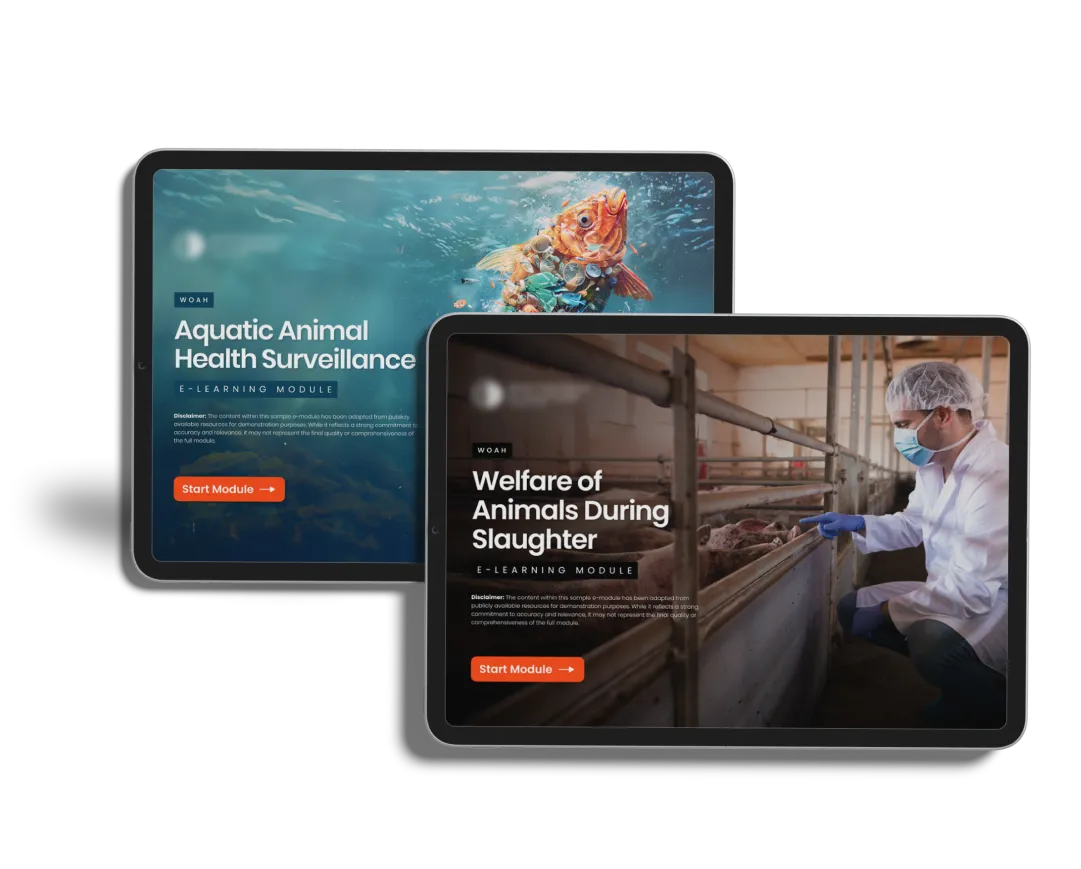
Modules Developed• Welfare of Animals During Slaughter
• Aquatic Animal Health Surveillance
Delivery Format• Articulate Storyline (2 modules)
• HTML-based interactive learning
(1 module variant)
Delivery ModelLMS-ready SCORM module and standalone prototype (RFP Proof of Concept)
LanguagesEnglish
project duration3 Weeks (RFP Proof of Concept)

Impact at a Glance

Scenario-supported digital learning replacing static policy content

Improved learner engagement through interactive activities and visual storytelling

Reinforcement of correct animal handling procedures

Structured learning supporting behavioural change in animal welfare practices

Scalable training solution suitable for international animal health programmes

Key Challenges & Constraints

1. Limited SME Access During RFP Stage

The modules were developed using publicly available reference material, without direct subject matter expert collaboration.


2. Sensitive and Complex Subject Matter 


3. Short Development Timeline


4. Need for Practical Behaviour Reinforcement

The training needed to move beyond informational content toward behavioural understanding of correct practices.


4. Multiple Learning Contexts

The modules addressed both aquatic surveillance environments and land-based slaughterhouse operations.


Our Strategic Approach

Structured Learning Progression 

Each module followed a clear instructional flow:

Pre-assessment → Learning Content → Interactive Practice → Knowledge Checks 

This structure allowed learners to build understanding step by step. 

Procedural Learning
Emphasis

Content was designed to reinforce correct procedures and handling practices, supporting behaviour change rather than simple knowledge recall.

Visual Context for Real-World Situations 

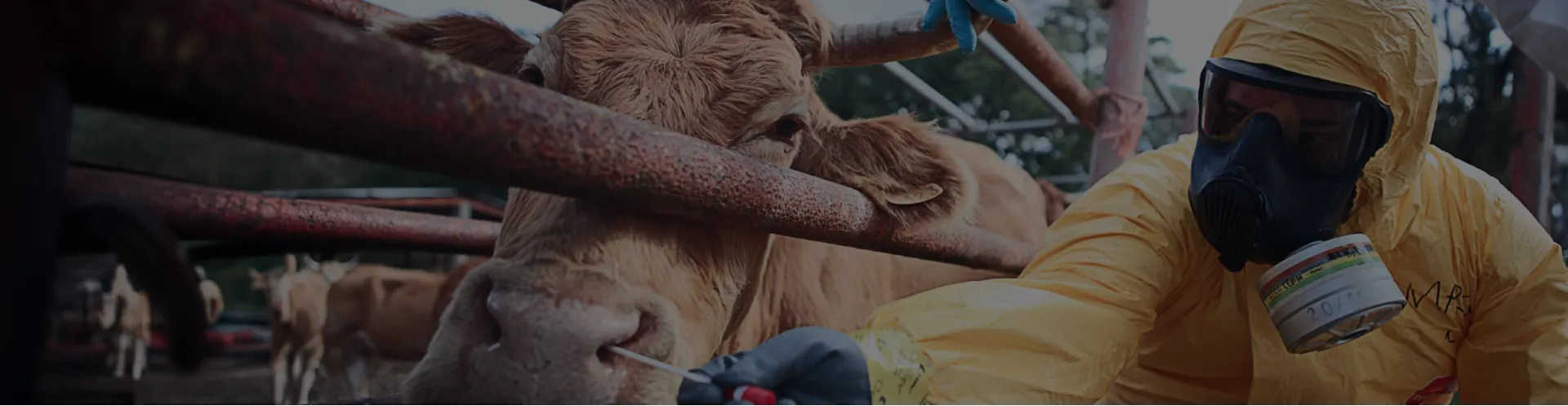
Imagery and contextual visuals were used to connect training content with real operational environments.

Modular Architecture 

Each topic was developed as an independent learning unit, enabling scalability and reuse in larger training programmes. 

Video-Supported Learning Moments 

Short visual segments helped contextualise complex animal welfare procedures.

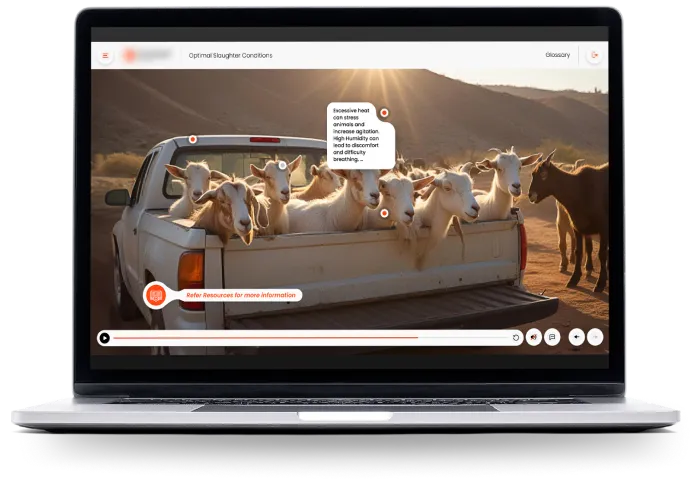
Hotspot
Exploration

Key elements of operational environments could be explored interactively.

Estimated Learning Metrics

(Based on Comparable Behavioural Training Deployments) 

2–3× increase

Learner Engagement

25–40% improvement

Retention of Operational Procedures

Significantly improved

Consistency in Animal Handling Practices

30–45% improvement

Confidence in Applying Animal Health Protocols

Impact Beyond Training

The modular structure allows the learning experience to expand into a broader training programme.

The modules emphasised practical behaviour rather than theoretical instruction.

Digital learning supports standardised interpretation of animal welfare guidelines across operational contexts.

The prototype provides a foundation for future modules covering additional animal health topics.

Key Takeaways

Practical Behaviour Reinforcement Is Essential in Animal Welfare Training
Interactive learning supports better understanding of operational procedures.

Visual Context Improves Technical Learning
Real-world imagery and animation clarify complex practices.

Short Modular Learning Enables Scalability
Compact modules allow flexible deployment across global programmes.

Rapid Prototyping Demonstrates Capability
Delivering multiple modules within three weeks showcased strong design and development capability.

Q1. Why develop animal welfare training as digital learning?

Digital modules allow consistent dissemination of standards and procedures across diverse operational environments.

Q2. Why include interactive elements like drag-and-drop and hotspots?

Interactive activities help learners practise correct procedures rather than simply reading guidelines.

Q3. Why was this developed as a Proof of Concept?

The modules were created as part of an RFP submission to demonstrate a scalable digital training approach.

Q4. Why is the three-week timeline notable?

Multiple modules were designed and developed rapidly while maintaining instructional clarity and interaction design.